TIME

Showing posts with label youtube. Show all posts

Sunday, 5 February 2012

The Subscriber Count of your YouTube Channel Could Go Down

Got a video channel on YouTube? You might see a drop in the subscriber count of your YouTube channel in the coming days.
Google is doing a clean-up and they’ll remove all closed and inactive YouTube accounts from the total subscriber counts . That is, if ‘zombie’ accounts have been following you on YouTube, they won’t be counted as subscribers anymore.
The YouTube team says that once the subscribe count numbers are adjusted, YouTube channel owners can expect an average drop of 4% or less. You might see a higher drop in subscriber numbers if your YouTube channel has been around for a longer period of time because you’ll have relatively more ‘closed’ accounts in your subscriber list.
To learn more about your YouTube subscribers, go to youtube.com/analytics and check the “Subscribers” link under Engagement Reports. It shows your subscriber count by geography, by date and how your various video uploads have affected, positively or negatively, your YouTube growth.

Saturday, 28 January 2012

How Google’s New Privacy Policy Will Affect You

GOOGLE-PRIVACY-120127-02-250x140

You’re on the way to a meeting. Traffic seems to be slowing. A text comes in: “You’re going to be late. Take the next exit for alternate route.” It’s from Google.

This is not Google’s version of Siri. It’s a result of the company’s push to use data it collects from you in novel ways that could be helpful, or unsettling.

“That’s not something I want my computer telling me. It’s creepy,” said Kurt Opsahl, senior staff attorney for the Electronic Frontier Foundation, a nonprofit digital rights advocacy organization located in San Francisco.

“Google has always collected information. That hasn’t changed,” Opsahl said. “But information that was once siloed will now be co-mingled.”

Google’s new policy replaces more than 60 existing product-specific privacy documents, for services including Gmail , YouTube and Google Docs. Google says the unified terms will provide better search results and serve up ads that are more likely to be of interest. By combining your history across products, it will have more data to work with.

Connecting the dots

Further, Google will merge data from the products you use and then analyze it to make new assumptions. That example of getting a text when you are running late is from a Jan. 26 email that Google itself sent to users. If you have an Android phone, Google already knows your location. If you keep appointments in Google Calendar, it also knows where you are trying to go. By cross-referencing that data with its traffic information service, Google can send you that alert.

Opsahl also pointed out that there are many people who have more than one Google account, such as one they use for business and one for personal communication. If data from different accounts are pooled into one Google repository with your name on it, that could cause problems.

“If Google received a warrant to disclose documents, and your business and personal docs are intermingled — that’s a problem,” he said. “Some would like to say, “No, thank you” and keep their accounts separate.”

“Google should make it easy for people to set up and manage separate accounts if they wish to do so,” Opsahl said.

Trouble ahead

While the new policy doesn’t eliminate users’ ability to set up different accounts under different names, Google intends to use data such as search history, whom you contact most frequently and your location to serve you better without regard for the partitions you may have created. “In short, we’ll treat you as a single user across all our products,” Google said.

The policy change could create problems for those who go by different names. Google’s new text reads:

“We may use the name you provide for your Google Profile across all of the services we offer that require a Google Account. In addition, we may replace past names associated with your Google Account so that you are represented consistently across all our services.”

Google+  requires real names while YouTube does not. Starting March 1, your real name could appear across Google products. If you’re hardworking accountant Jim by day and posting your Glee-inspired musical renditions on YouTube by night, you might have some explaining to do.

Take it or leave it

But Google has taken an-all-or-nothing position. “If you continue to use Google services after March 1, you’ll be doing so under the new Privacy Policy and Terms of Service. If you’d prefer to close your Google Account, you can follow the instructions in our help center,” reads Google’s FAQ page. Google says it remains committed to its data liberation policy, meaning you can request a copy of all of your data to use elsewhere when you close your Google account.

To get a glimpse of what Google knows about you, visit your Dashboard. Login to Google, go to “Account Settings,” select “Products” and then “Login to dashboard.” You’ll see a listing of the products you use and your most recent activity for each, including the last Web page you visited, your top three contacts and how many Google docs you’ve created.

Imagine the ways that data could be used — is it a “beautifully simple, intuitive user experience,” as Google says, or just plain creepy?

5SE3WWJFUY9D

Saturday, 10 December 2011

Google in its mid-life crisis!


Few days back, read an article about Larry Page, Founder and now-CEO of Google attempting to pull Google out of its mid-life crisis. The article headline was catchy, but no justification of what exactly is this mid-life crisis about.

1. Search
Yes – Search. Google’s core product is facing threat from another format of search: Real-Time Search.
Google continues to add more capabilities to index real-time information to its search algorithms; but fails to realize that traditional web-index based search is different from real-time search. Last year (April 2010), in its caffeine update Google claimed to provide 50% more fresher results. Nov 2011 it rolled out another set of changes to its search algorithms that affects 35% of all search queries. Again same month, it was discoveredthat Google started indexing comments on Facebook.
In real-time search, the context in which the information retrieved is no longer valid after sometime. In case of Twitter it does not last beyond a day. Or a week? Same with Facebook. At this same point while consumer search for this information on Google – it is impossible to figure out the context of that search query – real-time info or traditional.
Example. Apple launches its next smartphone – iPhone 5. Consumers looking for “smartphone” on Google Search are shown iPhone 5 results, even when they are not looking for it.

Methods of information indexing, querying, trending, and even consumer mindset for real-time search are different than traditional search. Google may end up killing product experience of Traditional web search with such attempts.
Content index based web search & real-time information search are different products. If Google intends to capture a mind-share of Real-Time web search; it needs to build a different product.
2. The Rise of Discovery Platforms
For years, Search was our only means to discover websites, content, products, services. Google was our gateway to the Internet.
Today, with social networks like Facebook, Twitter, LinkedIn and similar; consumers are discovering more and relevant websites, content, products or services. They come to us with recommendations, shares, comments from our contacts – and are more relevant. Interpret this as – Google is no longer the only discovery mechanism.
User adoption for Social Networks is increasing; they continue to have high mindshare and also consumers are spending more time on social platforms today. In addition to this, a whole new wave of innovative products are launched on top of Social Graphs enabling contextual discovery.
Social discovery methods are threat to Search.
3. Social
After 750+ Mn users on Facebook, 380+ Mn on Twitter, 115+ Mn on LinkedIn; Google now does understand the importance of having a Social Product.
Its earlier attempts – Orkut, Buzz, Wave failed. It is making a big push with Google+, trying to create a new Social Graph, without realizing that they are already established.
Social Graphs are reflection of our Social Relationships in real world. And they are:
  • Close Relationships: Facebook
    Family, Friends – People you know personally!
  • Professional Relationships: LinkedIn
    Colleagues, Partners, Business Relationships
  • Loose Relationships – Twitter
    Celebrities, Domain Experts. People you know, but they may not know you.
There is no room for creation of another graph. And for Google+, I strongly believe that it will fail again as it is still miles away from being a great social product.
On other hand – Spotify, Netflix, Hulu and many other products and startups are riding the Facebook Open Graph / Social Graph to increase social engagement and usage. While Google is missing the opportunity by not leveraging Facebook’s reach for its own products like YouTube, Google News and similar.
Social is not in Google’s DNA.
4. Continued Fascination with Google+
The rule to build successful products is – “Build quickly, learn, build, deploy. Doesn’t work, discard. Start again.” Google taught us this rule; and is now breaking it again and again.


Google should rather focus on building Google+, showing users the value proposition in this platform. Instead it is doing its biggest mistake – forcefully including Google+ in its other products. And in this process killing the user experience and usability of its successful products.
  • Search:  Introduced Google+ profiles of users who shared respective URL in search results.
  • Adwords:  Introduced the +1 button to Adwords display advts.
  • YouTube: Introduced videos shared by Google+ users on YouTube homepage.
  • Gmail: Introduced notifications on Google+ updates on Gmail header toolbar.
  • Google Reader: Introduced sharing options, adding users to Circles from Google Reader.
In any of the above products, Google+ additions are not enabling any core-feature of the main product. These would have been great things to do if Google+ had proved its own value to users. Google is simply leveraging successful products to promote Google+.
Didn’t Yahoo try his before – everything Yahoo. I didn’t work earlier, it will not work now.
5. Fixing whats not broken
Google wants to act fast and speed up its innovation. While doing this, it is actually fixing whats not broken.
Gmail -
  • The new design update Google is planning to push to all its users – is uncalled for. The functional updates are great thing to do, but the changes to its look are at the expense of product usability and could have been avoided.
  • Google announced launch of a very buggy version of its Gmail client for iOS; and recalled the same from app stores within hours.
  • Stops support for native Blackberry App. While Blackberry itself is on a decline, it still has a significant 19.7% share in US smartphone market and continues to grow in countries like India.
Search -
  • Started with its Caffeine roll-out in June 2010 to include fresh content.
  • In Nov 2011 – it pushed another big roll-out that impacts 35% of search queries.
  • Labnol discovered that Google is now indexing Facebook comments.
In search of freshness, Google is playing too much with its core search product. As mentioned earlier in this post, Real-Time search needs to be a different product.
Google Maps -
  • Announced pricing for Maps API High-volume usage.
  • Location is a key to future product innovation on top of Maps. This move is likely to affect a lot of startups innovating on top of Google Maps.
YouTube -
  • Homepage displays videos from People you follow on Google+
Google is also implementing design standardizations across all products – Search, Gmail, Reader, News, Books and more others. Google is killing uniqueness of its products by standardizing its look and feel and continuing with its fascination of Google+.
6. Siri
It may not be easy for anyone to dismiss Siri as a feature on iPhone 4S. Siri is not just voice recognition; it is another input methodology. Siri’s natural language interaction is far more superior than the syntax driven VA (Voice Actions for Android). VA is anywhere between 1-2 years behind Siri. That is a (HUGE) advantage Apple holds.
As the technology improves, one can start talking to Siri as -
  • “Siri, search for ‘MP3 Player’, take me to the best result!”
  • “Siri, show me the map of Mumbai.”
  • “Siri, who is offering the lowest flight ticket from Mumbai to London.”
There are infinite possibilities what Siri can develop into quickly. Most importantly – the potential it holds can make many Google products and services around it irrelevant, like -
  • Search – Ability to discover new websites and relevant services without using Google Search.
  • Adwords – Google relies on clicks for monetization. Siri means no clicks, just talking.
  • Maps – No longer view maps while driving, Siri will look up to them and speak out the directions.
  • SEO – What happens to the SEO ecosystem around Search? Will the new optimization be SVO (Siri Voice Optimization)? How will it work?
Google mastered the standard text-input methodology on Internet (Computers + Mobile). But the threat from Siri is Real. Of all challenges Google faces, Siri is the biggest. The last known big transition for input methodology was finger-based touch inputs (introduced with iPhone). In last couple of years, it replaced traditional keypads on all smartphones.
Siri should be a big bouncer to folks at Google; caught them off-guard and completely unprepared.
7. Android v/s iOS
Google scores a big thumbs up with Android capturing 43% of US smartphone market. Apple lost opportunity in developing countries due to its high-priced iPhones while Android phones & tablets flooded the markets with price points from $75 to $1000.
In my own view – I find Google strategy to enter smartphone market extremely fascinating. Samsung, Motorola, HTC, LG and many others were excellent hardware manufacturers with poor software / applications / user experience capabilities compared with Apple or even Nokia. Google gave what these partners lacked – an mobile operating system and ecosystem of applications.
Distribution of Android phones provided Google the opportunity to monetize the mobile search queries. Current trends in mobile are slightly more inclined towards building Apps & HTML5 websites, most developers and product companies want to ensure a seamless experience on phone and also presence with a native client. Google also aligning itself by directing mobile publishers to Adsense and enabling AdMob for Mobile applications.
Google acquired Motorola Mobility to debut itself as an Software+Hardware play (like Apple?). But it may have limited or no advantage with its own hardware play (through Motorola) as it will face tough questions from global Android partners like Samsung, HTC, Sony, LG and others who are responsible for large distribution of Android OS and its popularity. For now, the Apple dream may look difficult.
There are also few more challenges facing the Android ecosystem -
  • Apple still largest and extremely focused contender with its one-phone market strategy for iPhone
  • Android being open; Consumers have a huge choice for Android phones from $75 to $750.
  • Only differentiation between Android phones are hardware capabilities; hardware edge is tough to maintain.
  • Brands like Samsung, HTC, others will require to have devices at all price-points to ensure growing market share. Only significantly high volumes will bring profits.
  • Tough competition on price from Chinese and low-cost android phone manufacturers.
.
8. Monetization
2004: Google’s largest contributor to its Revenue: Adwords
2011: Google’s largest contributor to its Revenue: Adwords

In 2004, Advertising was only large scalable online monetization model. In the quarter Google debuted on Nasdaq; Amazon reported profit of just $54 Mn.
In 2011, there are various scalable monetization models:
  • Online Advertising / Search & Display (Google)
  • Online Advertising / Social (Facebook, LinkedIn & similar)
  • Mobile Advertising (Google, InMobi & others)
  • Local Advertising (Groupon, Foursquare & similar)
  • eCommerce (Amazon & others)
  • Enterprise, CRM (Salesforce, Box.net & others)
  • App Stores (Apple)
  • SaaS Products (Dropbox, Evernote, others)
  • Payments (PayPal, Square, others)
  • Smart Computing Devices / Tablets, Kindle, Smartphones (Apple, Amazon, others)
Multiple scalable monetization models evolved over last few years. Google unfortunately has not moved beyond Adwords.
.
9. Lack of Innovation
Over years, Google is struggling with innovation. Many existing and high potential products are on decline.
  • Blogger: Introduced the world to blogging. Lost battle to WordPress, Tumblr, Posterous.
  • Google Books: eBooks store of the World? eBook for Android phones?
  • Google Docs: Never really went beyond Gmail attachments. Evernote? Box.net?
  • Google News: News recommendation service or aggregation. Pulse?
  • Google Apps: Endless opportunities in Enterprise services.
Google also abandoned or mis-managed on some the big ideas -
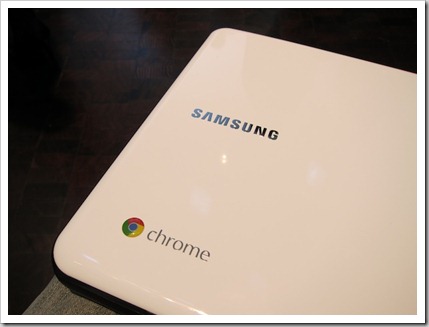
  • Chromebook:
    Post launch announcements, not much has been heard about Chromebook project. If Chromebooks were built to optimize over web, why did it not follow the Android platform? Ideally it should have built and optimized version of Android for laptops & tablets (Android 3.1 Honeycomb for tablets came much later).
  • Orkut:
    Google never realized the potential of Social until too late. Orkut which could have been the default Social Networking destination for world, never innovated beyond UI changes and probably never got the resources that it deserved.
  • GDrive:
    Google was to launch an online drive for storage back in 2007; much ahead of Dropbox’s launch. The project was abandoned and Google is reportedly working on its revival once again post Dropbox’s success.
Over years multiple products have evolved that Google has not paid attention to. Some of the hottest startups and businesses today are in product domains like – Multiple SaaS domains, Social Commerce, Social Products, Local Businesses and so on.
.
10. Failure to execute Acquisitions
If you can’t build it, acquire it. Google has done some awesome job with many of its acquisitions, but unfortunately not the ones in Social. The big lost opportunities here are Aardvark, Dodgeball and Jaiku.
  • Jaiku:
    An micro-blogging service that launched well before Twitter and acquired by Google in Oct 2007 had the potential to be Twitter or a tough competition. Twitter today has over 380+ Mn users and valued at an estimated $8 Bn.
  • Aardvark:
    An social QnA service created before Quora was acquired by Google for $50Mn in Feb 2010 had enough time to learn and innovate. Google announced its closure in Sept 2011. Lost opportunity – Quora is now valued at over $1 Bn.
  • Dodgeball:
    One of the earliest location based social products for mobile was acquired by Google in 2005 and discontinued in 2009. Dodgeball’s founder Dennis Crowley launched Foursquare which is one of the hottest location based products today with over 10 Million users.
.
Ending Notes
Design standardizations that kill identity of products. Inability to build competitive products and match speed of innovation. Failed attempts at Social Networking. Fascination to promote / push Google+ through its successful products. Failed acquisitions.
Google is currently showing all signs of being the next Yahoo. At this pace, engineers will sense more challenges and opportunities to innovate outside of Google. Its not too late, but yes – Google is in its mid-life crisis.
Concluding Notes for myself and other startups – “Don’t try to do something in everything. Rather focus on doing everything in something.”
[About the author: Guest article by PJ, entrepreneur building a Social Product in stealth mode. Article reproduced from his blog.]